
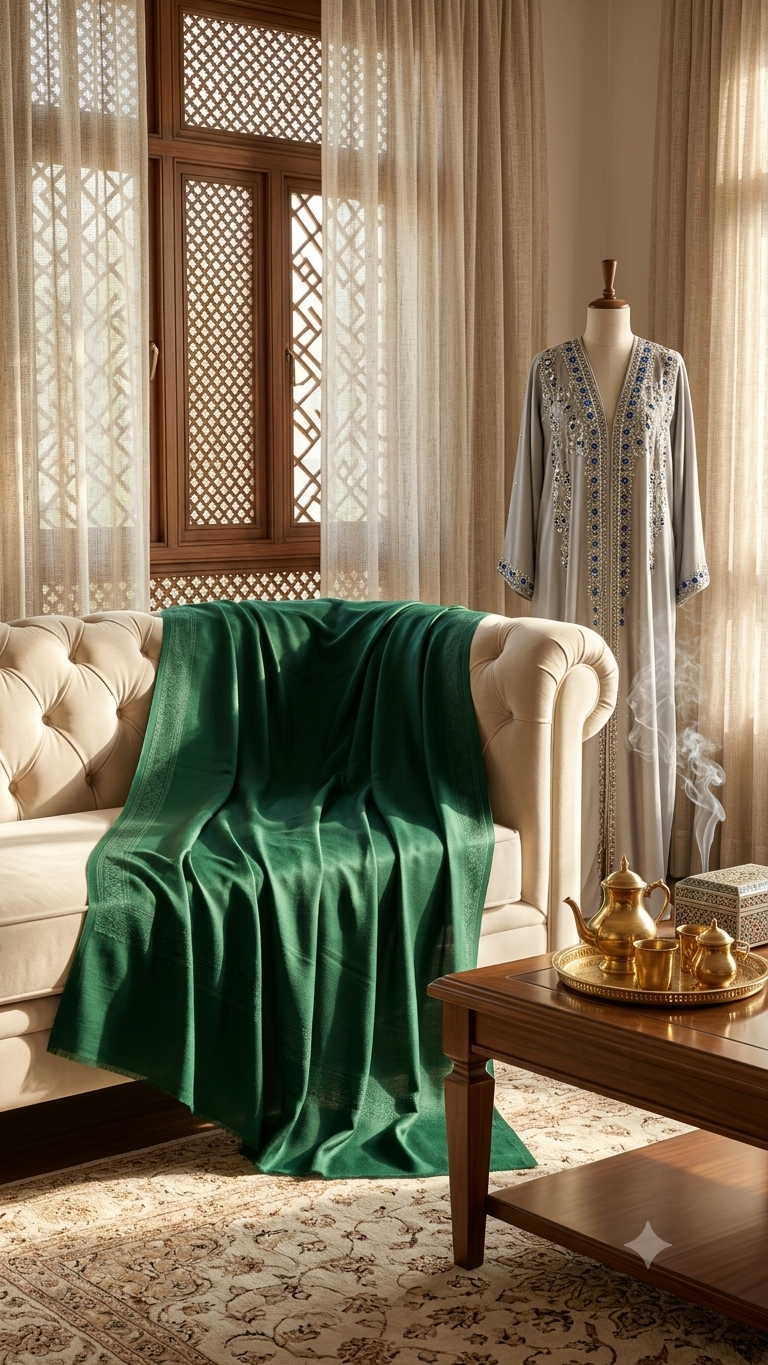
Pure Pashmina Shawl Online – Ultimate Buyer’s Guide 2026
You have seen them online – those stunning pashmina shawls with prices that seem too good to be true. You order one, and it arrives feeling rough, smelling like chemicals, and pilling after a single wear. You have been sold a fake.
The global pashmina market is flooded with machine-made imitations, blended fibers, and synthetic copies passed off as genuine Kashmiri pashmina. Unsuspecting buyers lose thousands of dollars every year on shawls that are barely worth a fraction of what they paid.
This guide solves that problem. Written by the heritage team at Sonzal the Rainbow – a direct-source partner of master weavers in Kashmir – this post will teach you everything you need to know about finding a pure pashmina shawl online.
Table of Contents
Here is what you will learn:
- ✅ What pure pashmina actually is and why it is so valuable
- ✅ How to spot authentic handwoven Kashmiri pashmina versus fake machine-made copies
- ✅ Realistic pricing based on quality, weave, and embroidery
- ✅ Where to buy safely online with GI certification and authenticity guarantees
Quick Answer: A pure pashmina shawl online is a handwoven luxury accessory made from the fine undercoat of the Changthangi goat, sourced from the high-altitude regions of Ladakh and Kashmir. It is characterized by extreme softness, a matte finish, feather-light weight, and a Geographical Indication (GI) tag certifying its authentic Kashmiri origin.
Quick Reference – Pashmina Shawl at a Glance
| Aspect | Details |
|---|---|
| What is it? | Handwoven shawl made from fine undercoat of Changthangi goat |
| Origin | Kashmir Valley, India (GI certified) |
| Primary Material | 100% pure Pashm (cashmere wool) from Changthangi goat |
| Fiber Diameter | 12–16 microns (finer than human hair) |
| Price Range (USD) | $80 – $1,500+ (depending on weave, embroidery, size) |
| Durability | High (50+ years with proper care) |
| Care Difficulty | Moderate (dry clean or gentle hand wash recommended) |
| Best For | Winter wear, gifting, weddings, formal occasions, collecting |
| Authenticity Markers | GI tag, extreme softness, matte finish, feather-light weight, natural smell |
What Is Pure Pashmina?
Pure pashmina is a luxury textile woven from the ultra-fine undercoat of the Changthangi goat, also known as the Pashmina goat. These goats are native to the high-altitude regions of Ladakh, Kashmir, and parts of Tibet, where temperatures drop to minus 40 degrees Celsius. The goats grow an incredibly soft, warm undercoat to survive the harsh winters – and this fine fiber is what we call pashm.
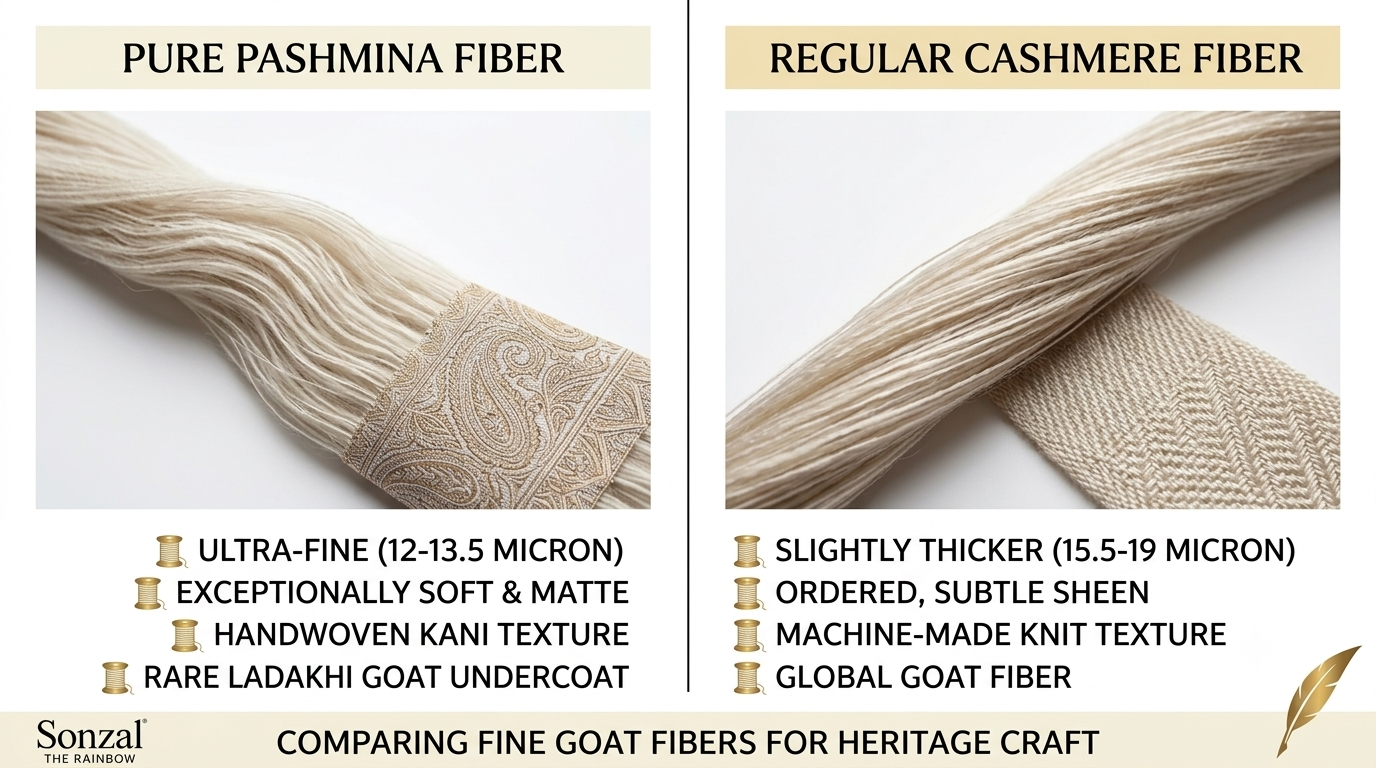
The name pashmina comes from the Persian word “pashm,” meaning wool. But this is no ordinary wool. Pure pashmina fibers are just 12 to 16 microns in diameter – thinner than a human hair, which measures about 50 to 100 microns. This extreme fineness is what gives pashmina its legendary softness, warmth, and feather-light feel.
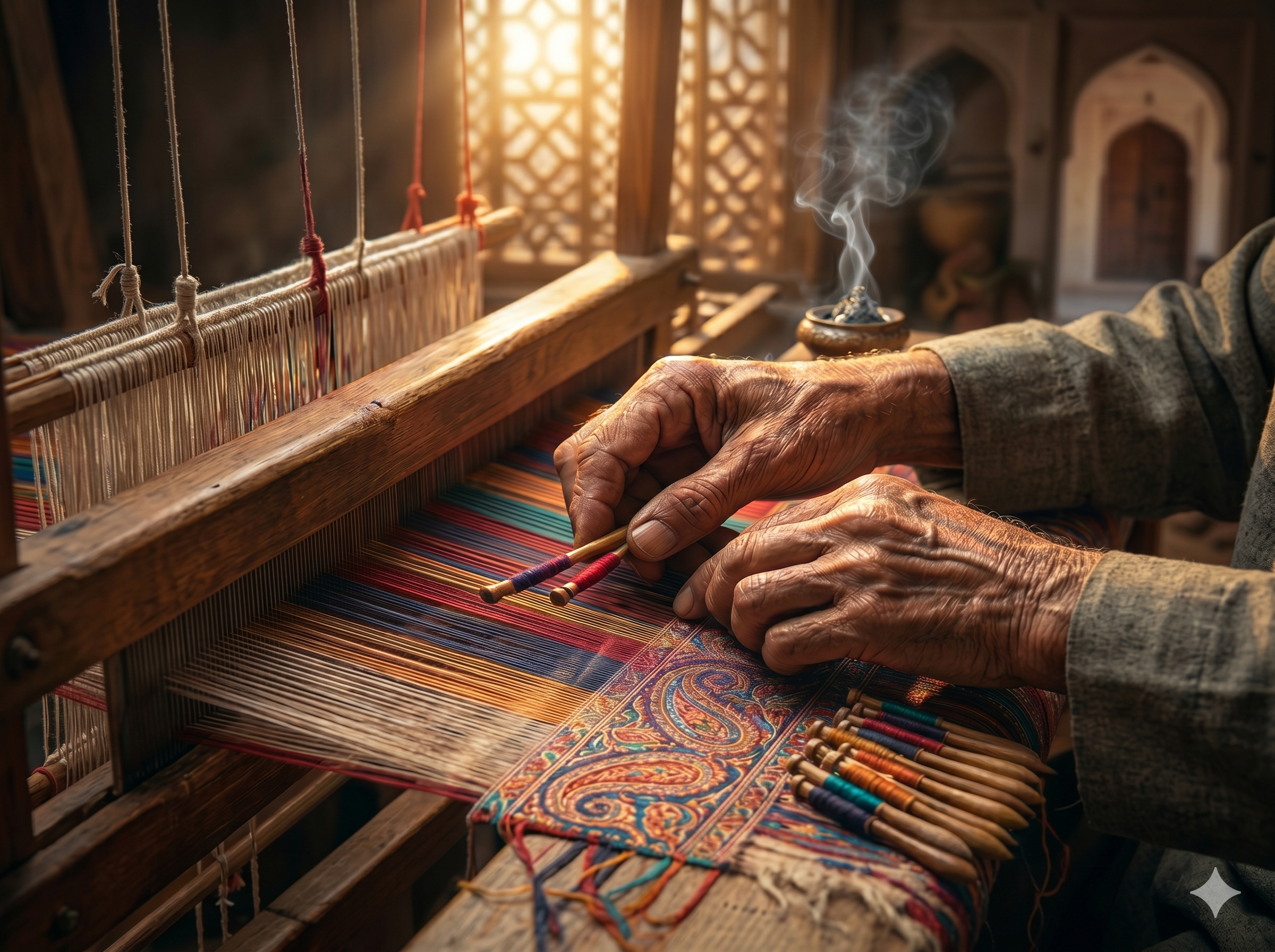
The history of pashmina weaving in Kashmir dates back over 600 years. It is believed that the craft was introduced by the Persian mystic Mir Sayyid Ali Hamadani, who came to Kashmir in the 14th century and noticed the fine wool of the local goats. He taught the Kashmiris how to weave this wool into beautiful shawls. Over the centuries, Kashmiri pashmina shawls became prized possessions of royalty, nobility, and collectors across the world.
Pure pashmina is valuable for several reasons:
- Rarity of raw material – Each Changthangi goat produces only 80 to 170 grams of pashm fiber per year
- Labor-intensive craftsmanship – A single plain pashmina shawl takes 2 to 3 weeks to weave; embroidered ones can take 6 months or more
- Artisan skill – Weaving techniques are passed down through generations of Kashmiri families
- Cultural heritage – Pure pashmina carries a GI tag from the Government of India, certifying its authentic Kashmiri origin
Pure Pashmina vs Cashmere – What Is the Difference?
Many people use the terms pashmina and cashmere interchangeably, but they are not exactly the same. Here is the difference.
| Feature | Pure Pashmina | Cashmere |
|---|---|---|
| Source | Changthangi goat (Ladakh/Kashmir) | Various breeds of cashmere goats (China, Mongolia, Iran) |
| Fiber Diameter | 12 – 16 microns | 14 – 19 microns |
| Softness | Exceptionally soft and smooth | Soft but slightly coarser |
| Weight | Extremely light (80-120 grams for a shawl) | Heavier (150-200+ grams) |
| Warmth | Superior warmth for weight | Warm but less insulating per gram |
| Origin | GI-tagged Kashmir Valley only | Multiple countries |
| Price | Higher ($150 – $1,500+) | Lower to medium ($80 – $500) |
| Weave | Handwoven on traditional looms | Often machine-made |
Pro Tip: All pure pashmina is cashmere, but not all cashmere is pashmina. The difference lies in the fineness of the fiber and the specific breed of goat. If a seller calls their product pashmina without mentioning Kashmir or GI certification, be cautious. The finest pashmina always comes from Kashmir.
How to Verify Authenticity – Printable Checklist
| Step | Action Item | Done (✅) |
|---|---|---|
| 1 | Check for GI tag or certificate of authenticity | ☐ |
| 2 | Perform the ring test – the shawl should pass through a ring easily | ☐ |
| 3 | Perform the burn test – pure pashmina burns like hair, not plastic | ☐ |
| 4 | Check weight – a pure pashmina shawl weighs 80-120 grams | ☐ |
| 5 | Feel the texture – it should be soft, not rough or slippery | ☐ |
| 6 | Check for matte finish – pure pashmina has a subtle matte sheen, not shine | ☐ |
| 7 | Ask for direct sourcing proof – weaver village, date, and name | ☐ |
| 8 | Check the price – genuine pashmina cannot be very cheap | ☐ |
Price by Quality, Weave and Size
| Type | Material | Weave | Average Price (USD) | Best For |
|---|---|---|---|---|
| Plain Pashmina | 100% pure pashmina | Handwoven (100-120g) | $150 – $300 | Everyday wear, office, travel |
| Embroidered Pashmina | 100% pure pashmina | Handwoven + Sozni or Aari embroidery | $350 – $800 | Weddings, parties, gifting |
| Kani Pashmina | 100% pure pashmina | Handwoven Kani weave (300+ KPSI) | $500 – $1,500+ | Collectors, heirloom, investment |
| Double-Sided Pashmina | 100% pure pashmina | Handwoven (special technique) | $400 – $900 | Luxury gifting, formal occasions |
| Pashmina Stole | 100% pure pashmina | Handwoven (lighter, smaller) | $80 – $200 | Summer evenings, office wear |
Pro Tip: If you see a “pure pashmina shawl” priced under $50 online, it is almost certainly a blend, synthetic, or machine-made. A genuine 100% pure pashmina shawl cannot be made, woven, and shipped for that price – even directly from Kashmir.
Expert Insights
| Element | Content |
|---|---|
| Persona Quote | “According to Ghulam Hassan Bhat, a fourth-generation master weaver from Srinagar with over 40 years of experience, ‘A single pure pashmina shawl with intricate Kani weave can take six months to complete. The skill is passed from father to son. Each shawl is a piece of Kashmir’s soul. No machine can replicate the softness of handwoven pashmina.'” |
| Specific Fact | A single pure pashmina shawl weighing 100 grams contains fibers from approximately three Changthangi goats. Each goat produces only 80-170 grams of pashm fiber per year. |
| Brand Statement | At Sonzal the Rainbow, we only source 100% pure pashmina shawls, directly from GI-certified artisan cooperatives in Srinagar. We publish the weaver’s name, village, and weaving date for every shawl. |
| External Citation | According to the Victoria & Albert Museum’s textile collection notes, Kashmir pashmina shawls were highly prized in Europe in the 18th and 19th centuries, with Empress Josephine of France famously owning a large collection. |
How to Identify a Pure Pashmina Shawl Online
Step 1: Start with the Certificate
Any seller offering a pure pashmina shawl online should provide a GI tag (Geographical Indication) or a detailed Certificate of Authenticity. This document must include the material composition (100% pure pashmina), fiber count (microns), weaving location, and the weaver’s name or cooperative name.
Step 2: Perform the Ring Test
This is the most famous test for pashmina authenticity. Take a large ring (or a ring-shaped object) and try to pass the entire shawl through it. A genuine pure pashmina shawl – being extremely fine and soft – will easily pass through a ring. Fakes, blends, or thicker cashmere will not.
Step 3: Perform the Burn Test
Cut a tiny fiber from the shawl and burn it. Pure pashmina (being an animal fiber) burns like human hair – it curls, smells like burned hair or feathers, and turns into ash. Synthetic fibers or blends melt, smell like burning plastic, and form hard beads. (Always do this in a safe place and never on the main shawl – use a loose thread from the fringe.)
Step 4: Check the Weight
A pure pashmina shawl of standard size (100×200 cm) weighs only 80 to 120 grams. It should feel incredibly light – almost like a feather. If the shawl feels heavy or substantial, it is likely blended with wool, synthetic, or machine-made.
Step 5: Feel the Texture
Pure pashmina feels ultra-soft, smooth, and luxurious – never rough, scratchy, or slippery. It has a subtle matte finish and does not shine. If the shawl feels glossy or shiny, it may be blended with silk or synthetic.
Step 6: Check the Price
If you see a “pure pashmina shawl” priced under $80 online, be very skeptical. Even wholesale directly from Kashmir, a genuine pure pashmina shawl cannot be sold for less than that. The labor, raw material, and GI certification all add to the cost.
Red Flags to Avoid
| Red Flag | Why It Is a Problem |
|---|---|
| Price under $50 for a full pashmina shawl | This is impossible. Even wholesale direct from Kashmir is $100+. Such a low price means the shawl is synthetic, blended, or machine-made. |
| Shiny or glossy texture | Pure pashmina has a subtle matte finish. Shine indicates silk blend or synthetic fibers. |
| Heavy weight (over 150g) | Pure pashmina is feather-light. A standard shawl should weigh 80-120g. |
| Seller says “pashmina wool” without mentioning Kashmir | This avoids specific Kashmir provenance. Genuine sellers proudly say “Kashmir Valley, India.” |
| No GI tag or certificate | Genuine pashmina sellers provide GI certification. If it’s missing, the product is likely not authentic. |
| No return policy | This suggests the seller knows the product will not pass inspection. Reputable sellers offer 7-14 day returns. |
| Machine-made looking edges | Handwoven pashmina has slightly uneven edges. Perfectly uniform edges suggest a power loom. |
Why Buy from Sonzal the Rainbow
| Benefit | What You Get |
|---|---|
| 🛡️ Certificate of Authenticity | Every pashmina shawl comes with a verified GI tag or detailed Certificate of Authenticity that includes the weaver’s name, village, and fiber count. |
| 🤝 Direct Artisan Sourcing | No middlemen. We work directly with GI-certified cooperatives in Srinagar, ensuring fair wages for weavers and authentic quality for you. |
| 🌍 Worldwide Shipping with Insurance | Fully tracked, insured door-to-door delivery. Free shipping on orders over $500. Delivery to the US, UK, UAE, EU, and Canada takes 5-10 business days. |
| 🎨 Free Expert Consultation | A 30-minute video call with our pashmina experts to help you choose the right color, weave, and embroidery for your needs. |
| 💯 Satisfaction Guarantee | A 7-day in-home inspection period. If you are not delighted, return the shawl for a full refund. |
| 🔄 Easy Returns | A 14-day return policy on non-custom shawls. We inspect and refund within 5 business days. |
“I ordered a pure pashmina shawl online from Sonzal and was nervous about authenticity. They sent me the GI certificate, the weaver’s name, and even a video showing the weave. The shawl is incredibly soft – it passed the ring test immediately. I will never buy pashmina from anyone else.”
— Priya M., New York (verified buyer, purchased embroidered pashmina shawl, April 2026)
Frequently Asked Questions
| # | Question | Answer |
|---|---|---|
| 1 | What is a pure pashmina shawl online exactly? | A pure pashmina shawl online is a handwoven luxury accessory made from the fine undercoat of the Changthangi goat in Kashmir. It is ultra-soft, feather-light, and comes with a GI tag certifying its authentic Kashmiri origin. Browse our pashmina shawl collection to see examples. |
| 2 | How can I tell if a pashmina shawl is authentic? | Check for five things: (1) GI tag or certificate of authenticity, (2) ring test – should pass through a ring easily, (3) weight – 80-120 grams, (4) matte finish – not shiny, (5) natural smell – like wool, not chemicals. |
| 3 | How much does a real pure pashmina shawl cost? | Prices range from $150 for a plain handwoven pashmina shawl to $1,500 or more for a Kani weave or heavily embroidered shawl. Machine-made or blended fakes are much cheaper but not genuine. |
| 4 | Where is the best place to buy a pure pashmina shawl online? | Look for sellers who provide GI tags or certificates, offer the ring test guarantee, show the weaver’s provenance, and have a clear return policy. Sonzal the Rainbow offers all of these plus a 7-day inspection period and live video verification. |
| 5 | How do I clean and maintain a pure pashmina shawl? | Dry clean is recommended. For gentle hand washing, use cold water with mild shampoo specifically for wool. Never wring or twist. Lay flat to dry away from direct sunlight. Store in a breathable cotton bag with cedar balls to prevent moth damage. |
| 6 | Do you ship pashmina shawls internationally? | Yes. We ship worldwide with full insurance and tracking. Delivery to the US, UK, UAE, EU, Canada, Australia, and GCC countries takes 5-10 business days. Free shipping on orders over $500. |
| 7 | Can I get a custom color or embroidery? | Absolutely. We work directly with master weavers in Srinagar to create custom colors, sizes, and embroidery patterns. The minimum order is $300, and lead time is 4-12 weeks depending on complexity. Contact us to start the conversation. |
| 8 | What is the ring test? | The ring test is a simple authenticity check. Take a large ring and try to pass the entire shawl through it. A genuine pure pashmina shawl will easily pass through the ring due to its extreme fineness and softness. Fakes or blends will not. |
| 9 | What is the difference between pashmina and cashmere? | All pure pashmina is cashmere, but not all cashmere is pashmina. Pashmina comes specifically from the Changthangi goat in Kashmir and has a finer fiber diameter (12-16 microns) compared to regular cashmere (14-19 microns). This makes pashmina softer, lighter, and warmer. |
| 10 | What is a Kani shawl? | A Kani shawl is the most prestigious and expensive type of Kashmiri pashmina. It is woven using the Kani technique, where small wooden sticks (kanis) are used to create intricate patterns. A single Kani shawl can take 6 months or more to complete and can cost $500 to $1,500+. |
Buying a pure pashmina shawl online is not like buying a regular scarf from a department store. It is an investment in centuries of Kashmiri craftsmanship, natural luxury, and timeless elegance – a piece that can be treasured for generations.
Three key takeaways:
- ✅ Authenticity is verifiable. Always demand a GI tag or certificate of authenticity. Perform the ring test and burn test. Check the weight and texture. Avoid shawls that are shiny, heavy, or smell of chemicals.
- ✅ Price reflects quality. A real pure pashmina shawl cannot cost $50. The raw material is rare, the weaving is labor-intensive, and the artisans deserve fair wages. If the price seems too cheap, it is fake.
- ✅ Buy from trusted sources. Sonzal the Rainbow provides certificates, direct artisan provenance, a 7-day inspection period, and international shipping with insurance.
Each genuine Kashmiri pashmina shawl is one of a kind. Once a shawl is sold, there will never be another exactly like it. If you find one you love, do not wait.
Ready to Find Your Perfect Pashmina Shawl?
Oman Contact: +96891179269 | +96876450569
India Contact: +919811449221 | +919718122866
