

Owning a hand-knotted piece from Srinagar is a privilege, but it comes with a common pain point: Fear of damage. Whether you are deciding between pure silk and a wool-silk blend or wondering how to store a family heirloom, this guide provides the technical precision required for 2026 luxury standards.
1. Silk vs. Wool-Silk Blends: The Durability Verdict
Before you buy, you must match the material to the “traffic zone” of your home.

The Pure Silk Powerhouse
- Best For: Bedrooms, formal drawing rooms, or wall hangings.
- The Profile: Pure silk is incredibly strong but thin. It lacks the “spring-back” elasticity of wool.
- The Bedroom Benefit: Silk is naturally hypoallergenic and stays cool, making it the best carpet material for bedrooms where barefoot comfort and air quality are priorities.
The Wool-Silk Blend (The Hybrid Choice)
- Best For: High-traffic living rooms and dining areas.
- The Profile: Usually a 70/30 or 80/20 ratio of Merino wool to Silk.
- Why it Wins for Longevity: Wool provides the structural “memory” to withstand heavy furniture legs and foot traffic, while silk provides the luxury sheen. These are the true durable luxury rugs of the modern era.
Table: Material Selection by Room | Room Type | Recommended Material | Priority | | :— | :— | :— | | Master Bedroom | 100% Mulberry Silk | Sensory Luxury | | Main Living Room | Wool-Silk Blend | Durability & Resilience | | Private Gallery | High KPSI Silk | Investment Display |
2. Kashmiri Carpet Cleaning at Home: The 2026 Protocol
Never treat a Kashmir silk rug like a standard synthetic carpet. Harsh chemicals will strip the natural sericin (silk protein), leaving the fibers brittle.

- Weekly Maintenance: Use a brushless vacuum suction only. Never use a beater bar or rotating brush on silk; it creates “friction frizz” that destroys the luster.
- Spill Management: Blot, never rub. Use lukewarm water and a drop of pH-neutral silk detergent.
- The Gravity Method: Every six months, hang your rug (if size permits) and gently tap the back to dislodge deep-seated dust that settles at the base of the knots.
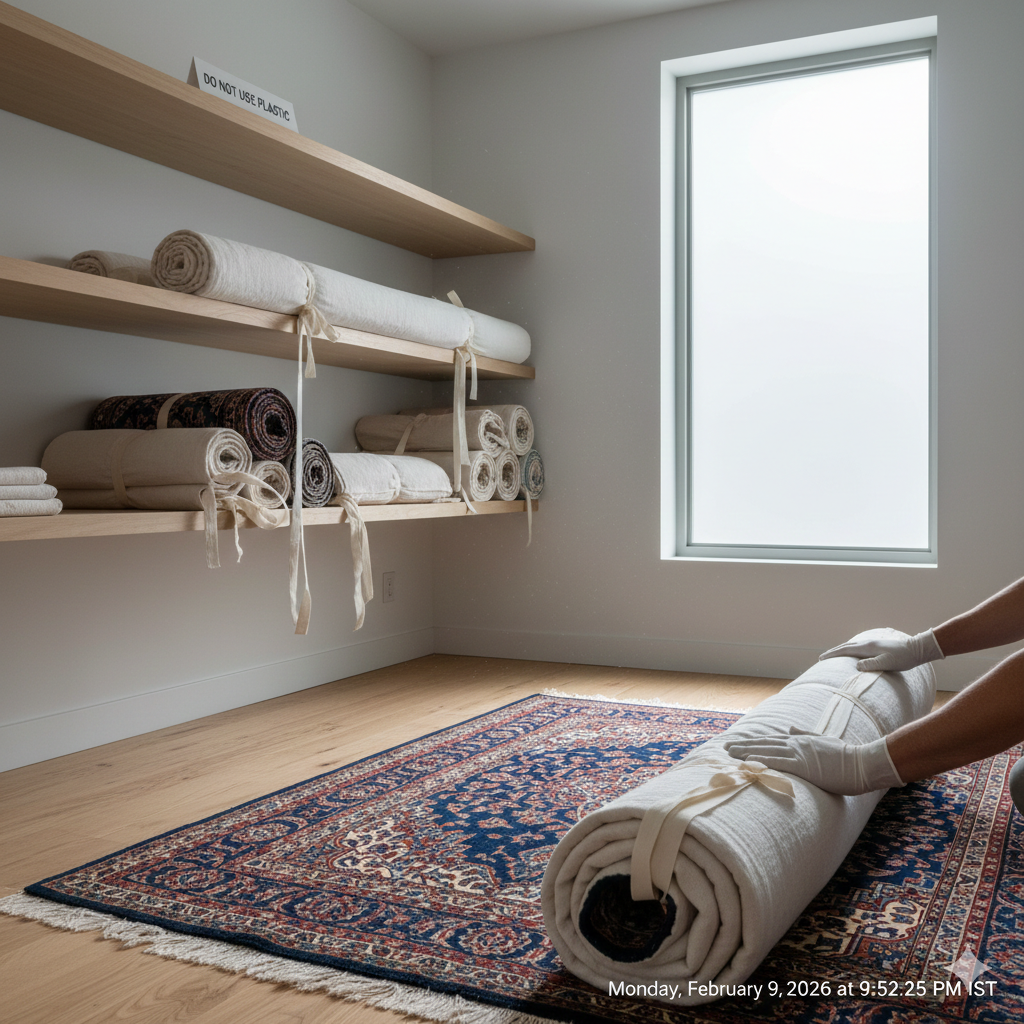
3. Storing Silk Rugs: Avoiding the “Three Killers”
If you are rotating your decor or moving, storing silk rugs incorrectly can lead to irreversible moth damage or dry rot.
- Clean First: Never store a rug with organic spills; they are a magnet for larvae.
- Roll, Don’t Fold: Folding creates permanent creases that snap the silk foundation fibers. Roll the rug with the pile facing inward to protect the face.
- Breathable Wrap: Avoid plastic. Use a cotton sheet or acid-free paper. Silk needs to “breathe” to maintain its moisture balance.
- Elevation: Store the rolled rug horizontally off the floor to prevent moisture wicking from the ground.
4. When to Seek Professional Rug Restoration
Even with the best care, life happens. In 2026, professional rug restoration has become a high-tech field. You should consult a specialist if:
- Fringe Wear: The fringe is the “anchor” of the rug. If it starts to unravel, the knots will follow.
- Color Bleed: If a spill has caused dyes to migrate.
- Moth Holes: Micro-reweaving can save a rug’s value, but only if caught early.
Expert Insight: A certified Kashmiri carpet with a GI Tag should only be restored by specialists familiar with the Talim (weaving script) to ensure the pattern is recreated with historical accuracy.
