
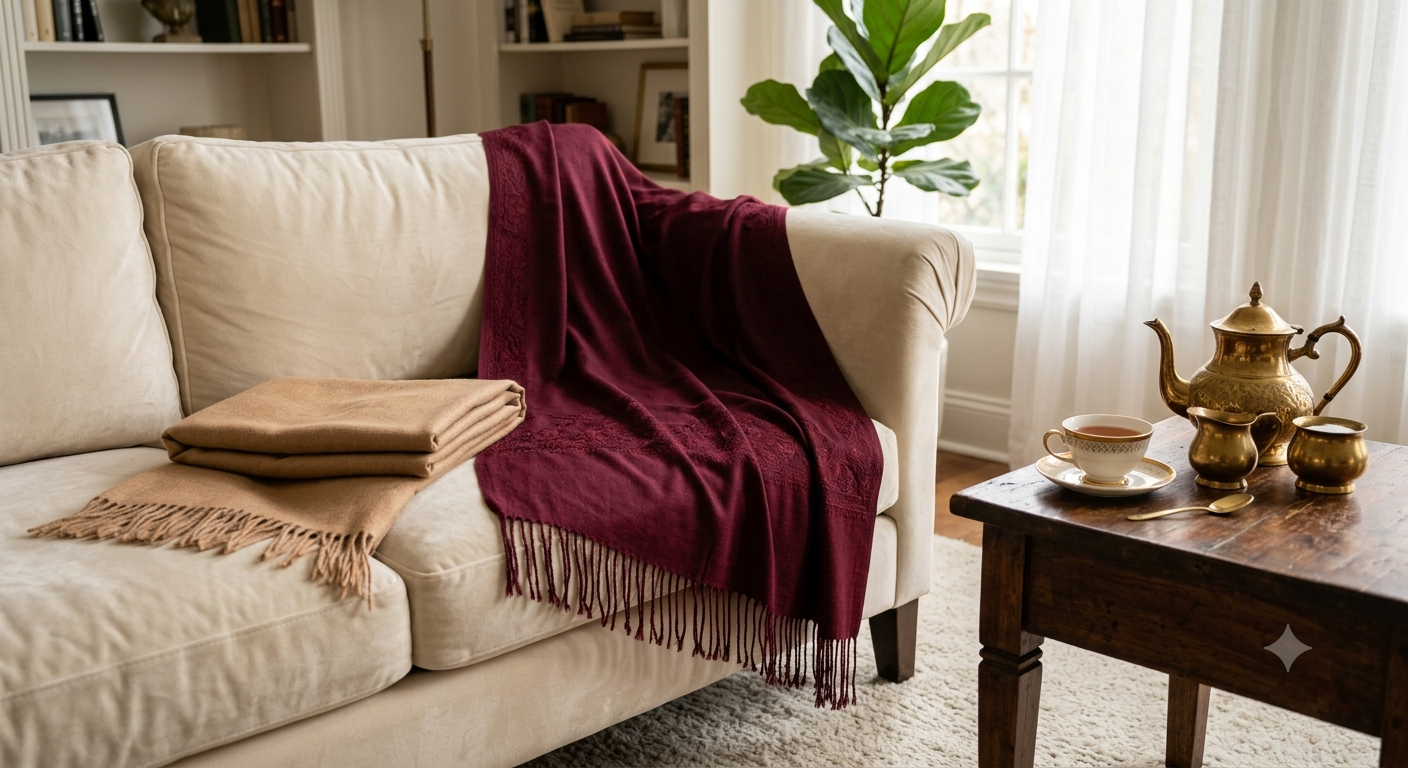
Pure Pashmina Shawl & Cashmere Wrap – The Ultimate Guide to Luxury, Authenticity & Style
Imagine wrapping yourself in a shawl so soft it feels like a whisper against your skin — lightweight yet impossibly warm, delicate yet enduring. This is the promise of luxury fibers like cashmere and pashmina, two of the most coveted materials in the world of fashion and home decor.
But when it comes to a pure pashmina shawl vs a cashmere wrap, the lines often blur. Are they the same thing? Is one better than the other? How can you tell if you are paying for genuine quality or a clever marketing label?
These are questions that confound even seasoned luxury shoppers. The global market is flooded with products claiming to be cashmere or pashmina, but many are blends, imitations, or mislabeled goods that fall far short of the real experience .
This guide will demystify the difference between a pure pashmina shawl and a cashmere wrap once and for all. Drawing on decades of expertise from Sonzal the Rainbow By Diamond Handicrafts Industry — a trusted name in authentic Kashmiri handicrafts — we will take you through the history, origins, fiber characteristics, craftsmanship, and value of these two remarkable materials.
Table of Contents
- ✅ What pure pashmina and cashmere actually are and why they are so valuable
- ✅ The key differences between a pashmina shawl and a cashmere wrap
- ✅ How to identify authentic pure pashmina and cashmere — and avoid clever imitations
- ✅ Current pricing, styling tips, and care guidelines for your luxury investment
Quick Answer: The difference between a pure pashmina shawl and a cashmere wrap comes down to fiber fineness, origin, and craftsmanship. Both come from the same type of goat, but pashmina refers specifically to the ultra-fine undercoat of the rare Changthangi goat from Ladakh — with fibers measuring 12-16 microns — hand-spun and handwoven in Kashmir . Cashmere is a broader term for the same type of wool, with fibers ranging from 14-19 microns, often machine-processed and sourced from multiple regions including China, Mongolia, and Iran .
Quick Reference – Pashmina Shawl vs Cashmere Wrap at a Glance
The Story Behind the Fibers
What is Cashmere?
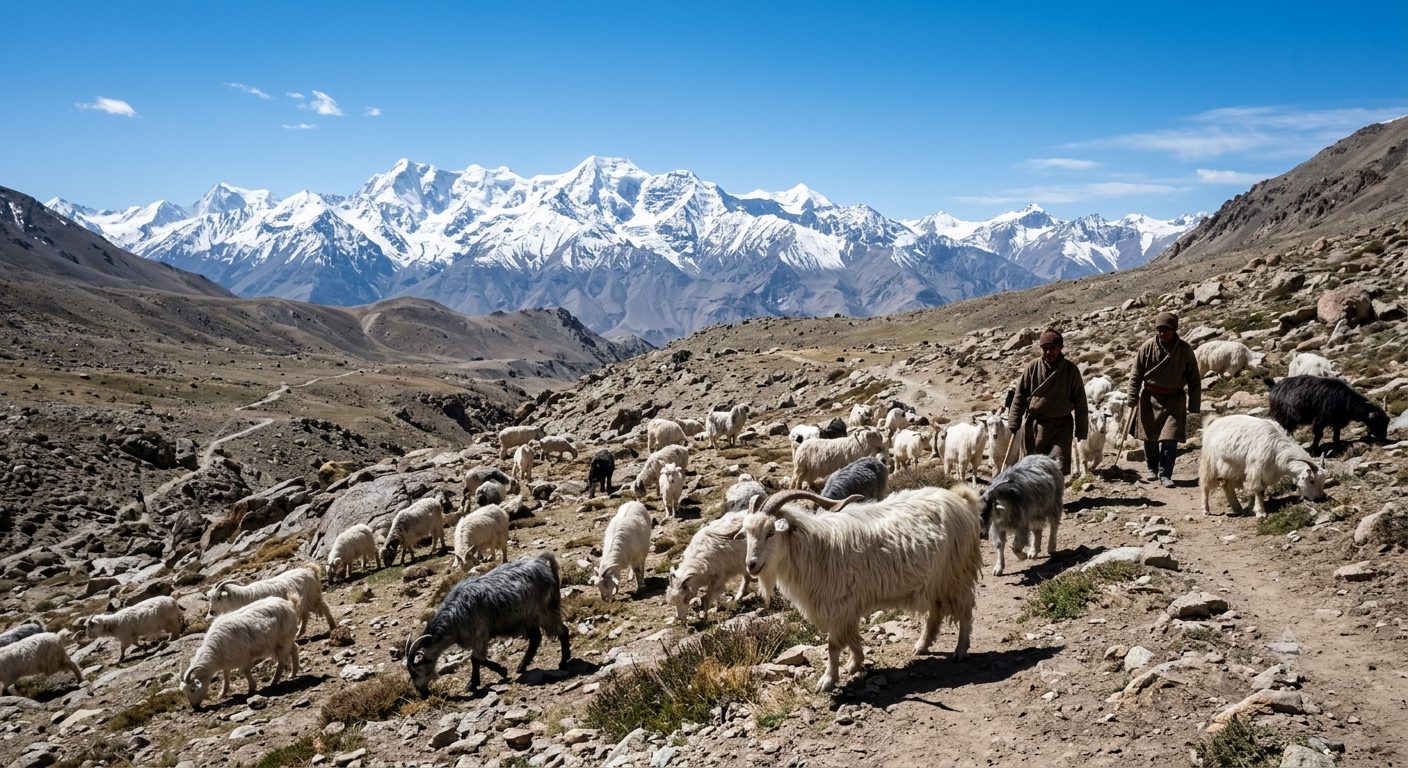
Cashmere is a luxurious natural fiber obtained from the soft undercoat of cashmere goats (Capra hircus), which grow a fine, warm underlayer to survive harsh winters in cold, mountainous regions. These goats are found primarily in China, Mongolia, Iran, and India, with the finest quality coming from the high-altitude regions of Ladakh .
The goats naturally shed their undercoat each spring, and the wool is carefully collected through gentle combing — a process that does not harm the animals. Each goat produces only 150-200 grams of usable cashmere per year, contributing to the fiber’s rarity and premium status .
The fiber diameter of cashmere typically ranges from 14 to 19 microns, though it can be as fine as 12 microns or as coarse as 21 microns depending on quality . This extraordinary fineness gives cashmere its signature softness, lightweight warmth, and breathability — making it highly prized in luxury fashion.
What is Pure Pashmina?
Pashmina is often described as “the finest version of cashmere” — or, as some call it, “soft gold” and “diamond fiber” . The word comes from the Persian word “pashm,” meaning wool .
Pure pashmina wool is exclusively sourced from the rare Changthangi goats (also known as the Pashmina goat) — a breed native to the high plateaus of Ladakh in northern India, living at altitudes above 14,000 feet . The extreme cold forces these goats to grow an exceptionally fine, dense undercoat.
The fiber diameter of pure pashmina ranges from 12 to 16 microns — finer than most cashmere and thinner than human hair . This ultra-fineness gives pashmina its legendary softness and feather-light feel. Pashmina has been registered as a Geographical Indication (GI) under TRIPS, emphasizing the pride of pure bloodline and the value of historical heritage .
A Brief History
Pashmina has been prized for centuries. Samples of pashmina wool fibers recovered from the ancient Indus Valley Civilization at Harappa suggest the material has been valued for over 4,000 years. In Mughal times, pashmina shawls were used as indicators of rank and nobility .
The Kashmir shawl — woven from pashmina — became globally renowned, and the craft was traditionally passed down through generations of Kashmiri artisans. Pashmina gained international fame when Kashmiri carpets and shawls were displayed at the Crystal Palace in London in 1851.
During the 19th century, Europeans began using the word “cashmere” to describe this fibre, while the term “pashmina” has been used to describe the traditional shawl or stole that is made of either pure cashmere, or a mix of cashmere and silk, and is draped over the shoulders by Nobles and Royalty . Today, pure Pashmina remains a luxury even in India, with master weavers creating timeless pieces that often take months or years to complete .
Key Differences: Pashmina Shawl vs Cashmere Wrap
1. Fiber Diameter – The Micron Difference
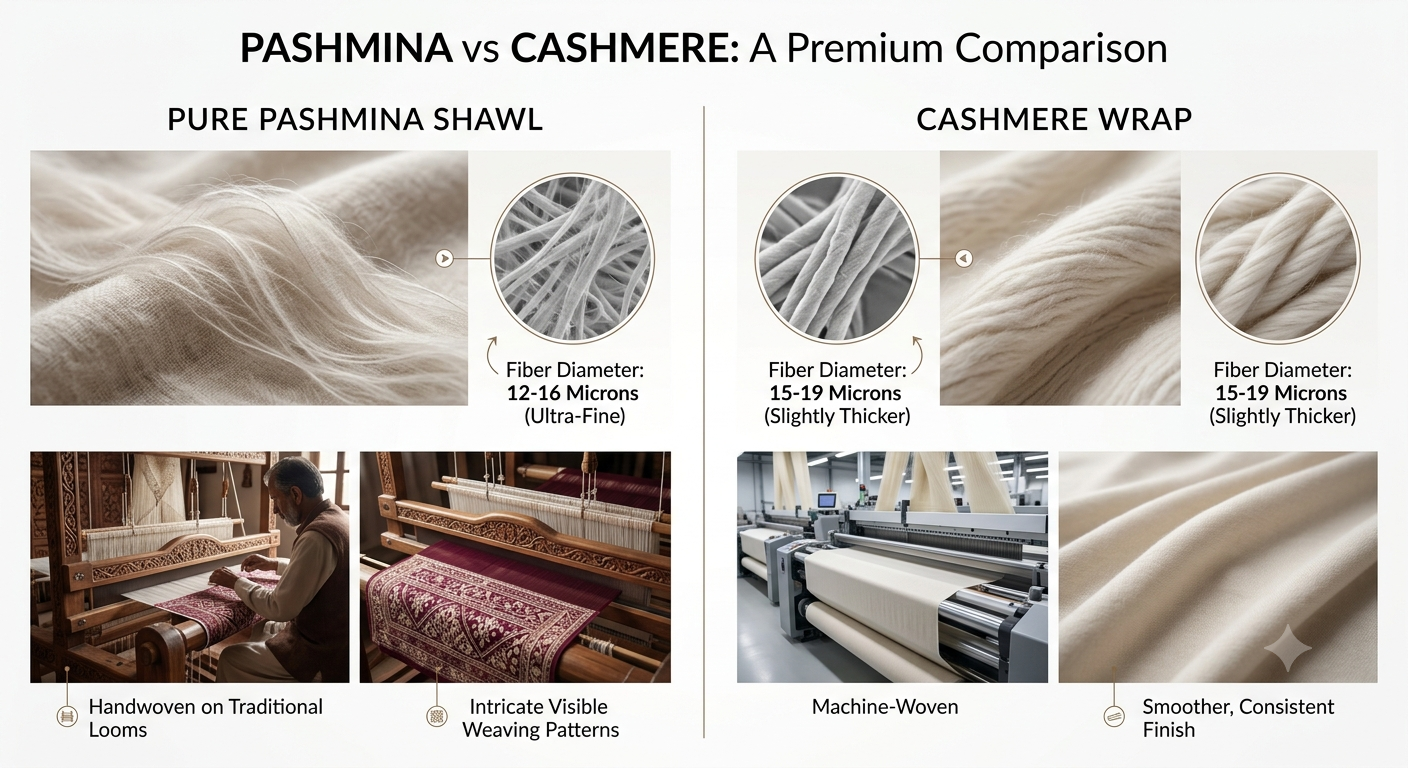
The most fundamental difference between a pure pashmina shawl and a cashmere wrap lies in the fineness of the fiber, measured in microns .
| Fiber Type | Diameter Range | Human Hair Comparison |
|---|---|---|
| Pure Pashmina | 12 – 16 microns | Finer than human hair (50-100 microns) |
| Cashmere | 14 – 19 microns | Still fine, but slightly thicker |
| Regular Wool | 20 – 40 microns | Much coarser and itchier |
2. Origin – Where the Goats Live
- Cashmere is sourced from various cashmere goat breeds found across China, Mongolia, Tibet, Iran, and India .
- Pure Pashmina comes exclusively from the Changthangi goat breed in the Ladakh region of India, living at altitudes above 14,000 feet .
3. Craftsmanship – Hand vs Machine
Cashmere can be machine-spun and machine-woven, especially in mass-market products.
Pure Pashmina is traditionally hand-spun and handwoven by skilled Kashmiri artisans using centuries-old techniques .
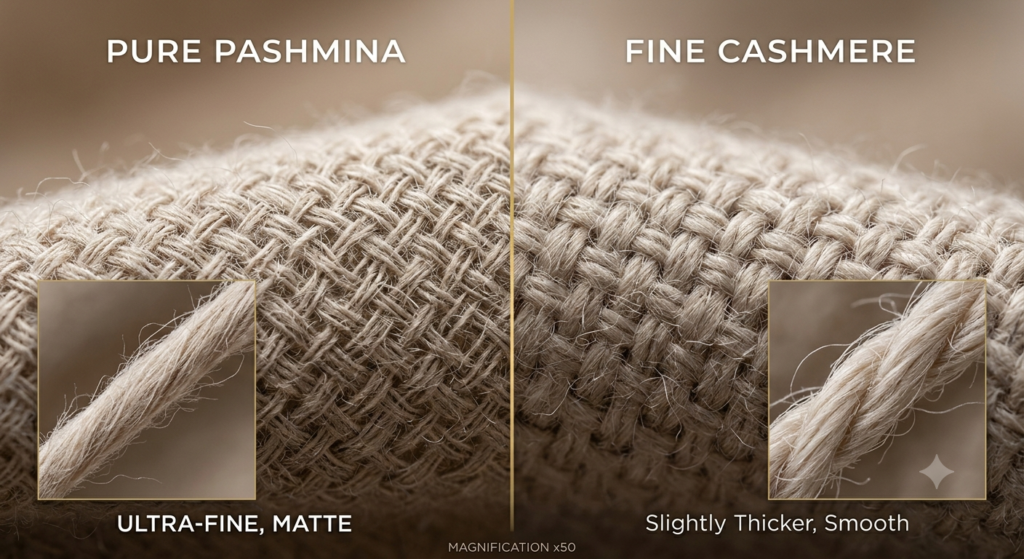
Insider Tip: A fine pashmina has a particular kind of softness: not slippery, not overly fuzzy, not ‘blanket-like.’ Instead it is smooth, refined, and warm with surprising lightness.
4. Warmth and Weight
Pashmina is lighter and warmer than cashmere, gram for gram. The ultra-fine fibers trap more heat while weighing less, creating a “feather-light warmth” that is unmatched .
Cashmere is also warm and lightweight but tends to be slightly heavier and less delicate .
5. Durability
Cashmere is more durable and suitable for everyday wear, including sweaters, scarves, and blankets .
Pure Pashmina is more fragile and delicate, best reserved for luxury shawls, stoles, and special occasions .
6. Price
Both are expensive, but pashmina commands a premium price due to its rarity, finer fibers, and handcrafted production. A pashmina shawl can take 3-4 months to weave, with premium pieces taking 8 months to 2.5 years and costing up to Rs 12.5 lakhs ($15,000+) .

How to Identify Authentic Pure Pashmina and Cashmere
Step 1: Check the Origin
Genuine pure pashmina comes from Ladakh, India. Cashmere can come from various regions including China, Mongolia, and Iran .
Step 2: Perform the Burn Test
Pure pashmina (animal fiber) burns like hair — it curls, smells like burnt feathers, and turns to ash. Synthetic fibers melt and smell like burning plastic .
Step 3: Perform the Ring Test
A genuine pure pashmina shawl should pass through a wedding ring due to its extreme fineness .
Step 4: Examine the Texture
Pure pashmina feels ultra-soft, smooth, and refined — not slippery, not overly fuzzy. Cashmere is also soft but slightly coarser .
Step 5: Look for Certification
Reputable sellers provide certificates of authenticity. In India, look for GI tags (Geographical Indication) and PCC (Pashmina Certification Center) certifications .
Styling Your Pure Pashmina Shawl or Cashmere Wrap
For the Pure Pashmina Shawl (36″ x 80″)
- Formal Events – Drape over the shoulders as a poncho-like wrap for weddings and evening parties
- Traditional Look – Wear over the head and wrap across the neck for old-fashioned glamour
- Belted Style – Add a belt at the waist over a simple dress for instant sophistication
For the Cashmere Wrap (28″ x 80″)
- Everyday Elegance – Drape casually over the shoulders for office or lunch
- Travel Essential – Lightweight and versatile, perfect for chilly evenings, cruises, or air-conditioned places
- Casual Panache – Tie around the neck for effortless style
Pricing Guide – Pure Pashmina Shawl vs Cashmere Wrap
Frequently Asked Questions
What is the difference between a pure pashmina shawl and a cashmere wrap?
The difference between a pure pashmina shawl and a cashmere wrap comes down to fiber fineness and craftsmanship. Pure pashmina comes from the Changthangi goat in Ladakh with 12-16 micron fibers, hand-spun and handwoven. Cashmere comes from various regions, has 14-19 micron fibers, and may be machine-processed .
Which is more expensive – pure pashmina or cashmere?
Pure pashmina is significantly more expensive than regular cashmere due to its rarity, finer fibers, and labor-intensive handcrafting process. A pashmina shawl can cost $150-$1,000+, with heirloom-grade pieces reaching $15,000+ .
How can I tell if my pashmina shawl is authentic?
Look for: (1) Ladakh origin, (2) ultra-soft, feather-light feel, (3) handcrafted irregularities in the weave, (4) reasonable price (not under $100), (5) certificate of authenticity or GI tag, and (6) burn test results (burns like hair, not plastic) .
What is the fiber diameter of pashmina vs cashmere?
Pure pashmina fibers are 12-16 microns. Cashmere fibers are 14-19 microns, though they can range from 12-21 microns depending on quality .
Can I wear pure pashmina every day?
Pure pashmina is more delicate than cashmere and is best reserved for special occasions or careful use. For everyday wear, cashmere is more durable and practical .
What is the ring test for pashmina?
The ring test is a famous test for pashmina authenticity. A genuine pure pashmina shawl will easily pass through a wedding ring due to its extreme fineness .
Do you ship pure pashmina shawls and cashmere wraps internationally?
Yes. At Sonzal the Rainbow, we ship pure pashmina shawls and cashmere wraps worldwide with full insurance and tracking. Browse our pashmina collection or contact us for more information.
Conclusion
Understanding the difference between a pure pashmina shawl and a cashmere wrap is the first step toward making an informed luxury purchase. Both fibers are extraordinary in their own right, but they offer distinctly different experiences.
Three key takeaways:
- ✅ Pashmina is the finest form of cashmere. While both come from goats, pure pashmina comes from the rare Changthangi goat breed in Ladakh, with fibers measuring 12-16 microns — finer and softer than standard cashmere .
- ✅ Craftsmanship sets pashmina apart. Pure pashmina is hand-spun and handwoven by skilled Kashmiri artisans using centuries-old techniques, making each piece a work of wearable art .
- ✅ Choose based on your needs. Cashmere offers durability and versatility for everyday wear, while pure pashmina offers unmatched luxury, warmth, and rarity for special occasions and investment pieces.
Every genuine pure pashmina shawl is a piece of living heritage — crafted by artisans who have inherited skills passed down through generations. When you buy authentic pashmina, you are not just buying a shawl. You are preserving a centuries-old craft and supporting the communities that keep it alive.
Ready to Find Your Perfect Pure Pashmina Shawl or Cashmere Wrap?
Oman Contact: +96891179269 | +96876450569
India Contact: +919811449221 | +919718122866
