
Wool vs Silk Kashmiri Carpet – Which Material Is Right for Your Home?
Imagine standing before two magnificent carpets. One gleams with a luminous sheen, its colors shifting like liquid gemstones as the light moves across its surface. The other radiates a warm, matte richness, its texture soft and inviting underfoot. Both are masterpieces of Kashmiri craftsmanship. But one is silk, and the other is wool. Which one is right for you?
The choice between a wool vs silk Kashmiri carpet is one of the most important decisions you will make when investing in these handcrafted treasures. Each material offers distinct advantages in terms of beauty, durability, price, and maintenance. Understanding these differences is essential for making a purchase that you will treasure for decades.
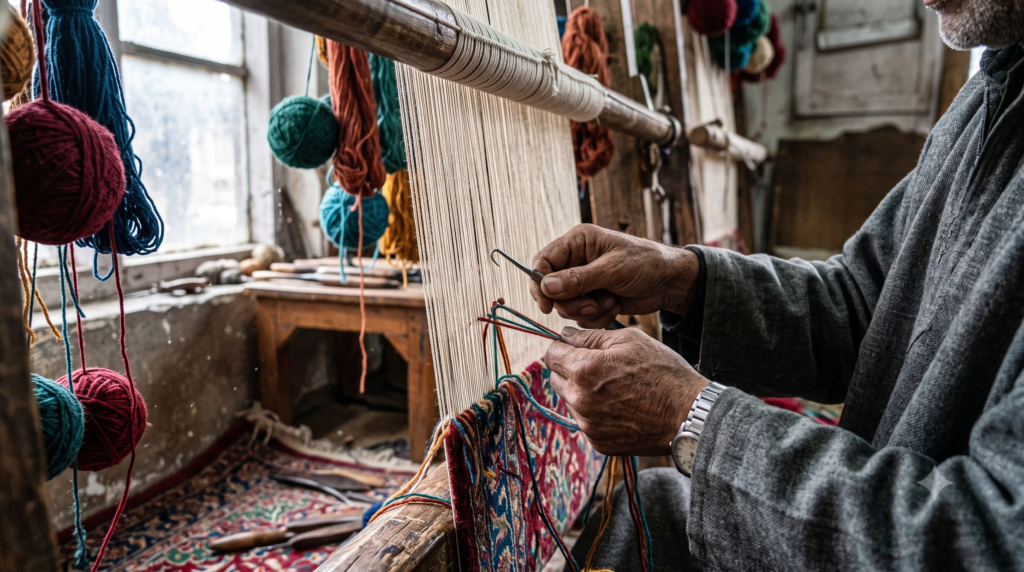
Kashmiri carpets are hand-knotted, never tufted, using either woollen or silken material . The woolen carpets always make use of a cotton base for both warp and weft, while silk carpets usually have a cotton base, though some premium pieces use silk for the foundation as well . The fineness of a carpet is indicated by its knot count (KPSI), which can range from 324 to 900 knots per square inch, with some exceptional pieces exceeding 2000 knots .
This guide will help you navigate the wool vs silk Kashmiri carpet decision, exploring the unique characteristics, advantages, and considerations for each material.
Table of Contents
- ✅ The fundamental differences between wool and silk Kashmiri carpets
- ✅ Durability, maintenance, and longevity considerations for each material
- ✅ Aesthetic qualities – color, sheen, and visual impact
- ✅ Price comparisons and investment value
- ✅ How to choose the right material for your specific needs and lifestyle
Quick Reference – Wool vs Silk Kashmiri Carpet at a Glance
| Aspect | Wool Carpet | Silk Carpet |
|---|---|---|
| Material | Wool pile on cotton base | Silk pile on cotton or silk base |
| Knot Density (KPSI) | 100 – 500 | 500 – 900+ (up to 2000+) |
| Durability | High – ideal for high-traffic areas | Moderate – best for low-traffic spaces |
| Maintenance | Easier – resistant to stains | Higher – requires professional care |
| Feel | Soft, warm, textured | Luxurious, smooth, cooler |
| Sheen | Matte finish | High-gloss, shimmering |
| Price (USD) | $400 – $2,500+ | $2,000 – $12,000+ |
| Best For | Living rooms, family spaces, everyday use | Formal spaces, collectors, heirlooms |
Understanding the Materials
Wool Kashmiri Carpets
Wool has been the traditional material for Kashmiri carpets for centuries. Woolen carpets always make use of a cotton base for both warp and weft . The wool used is typically sourced from sheep and is valued for its warmth, durability, and natural resilience.
Key Characteristics:
- Natural Durability – Wool fibers are naturally resilient and can withstand high foot traffic without showing significant wear.
- Warmth and Comfort – Wool provides excellent insulation, making these carpets warm underfoot in colder climates.
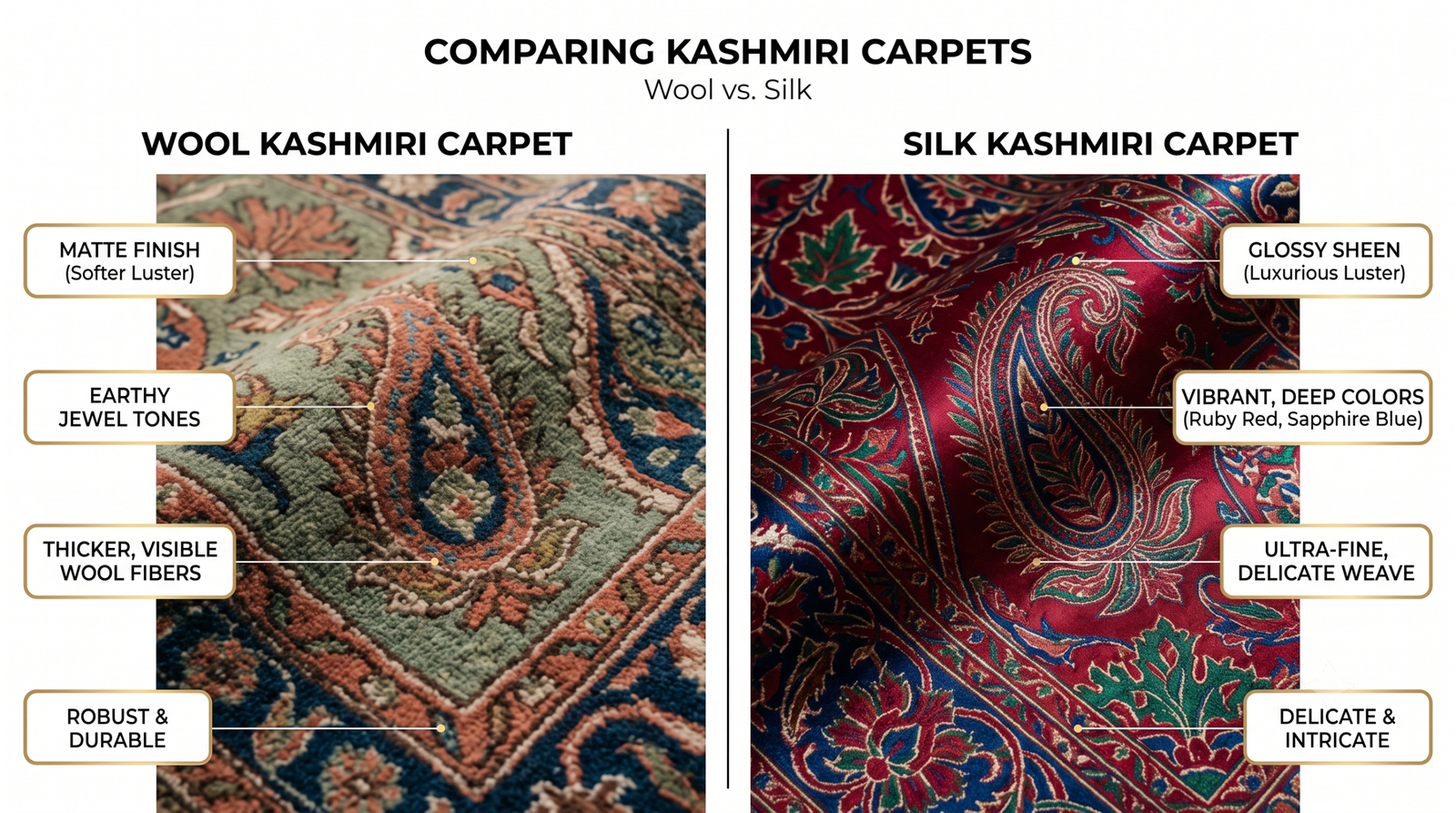
- Matte Finish – Unlike silk, wool has a soft, matte appearance that does not reflect light dramatically.
- Ease of Maintenance – Wool is naturally stain-resistant and easier to clean than silk.
Silk Kashmiri Carpets
Silk carpets represent the pinnacle of Kashmiri craftsmanship. The silk used is often natural mulberry silk, with the best quality historically imported from China, though Indian silk from Patna is also considered excellent . Silk carpets can be made in various ways:
- Silk-on-Silk (All Silk) – Silk is used as both the foundation (warp) and pile. These are the most luxurious and expensive.
- Silk on Cotton – The pile is silk, but the foundation is cotton. This is currently more common and offers a balance of quality and cost .
Key Characteristics:
- Luxurious Sheen – Silk has a natural luster that catches the light, creating a shimmering, luminous effect.
- Fine Detail – Silk allows for higher knot densities, resulting in more intricate designs and finer detail.
- Cool and Smooth – Silk feels cool and smooth to the touch, a sensation many find luxurious.
- Delicate – Silk is more delicate than wool and requires more careful handling.
Key Differences: Wool vs Silk Kashmiri Carpet
1. Durability and Longevity
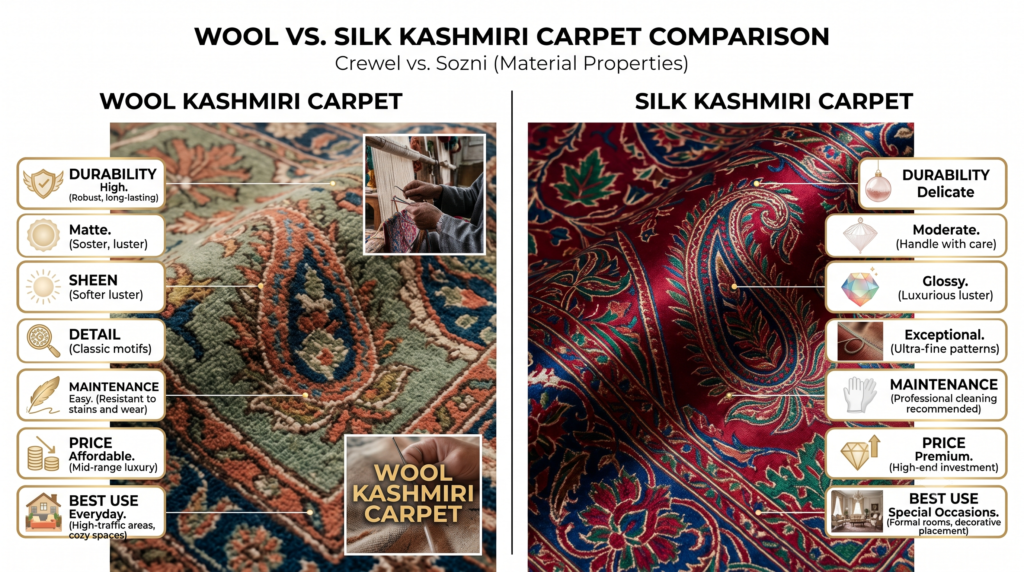
Wool Carpets: Wool is naturally resilient and durable. A well-made wool Kashmiri carpet can last 50-100+ years with proper care. The fibers bounce back from foot traffic, and the material resists crushing and matting.
Silk Carpets: Silk is more delicate. While a silk carpet can also last decades, it is less resistant to heavy foot traffic and may show wear more quickly in high-traffic areas. Silk fibers can be damaged by sharp objects or excessive friction.
Insider Tip: The more knots per square inch, the higher the carpet’s price as well as durability . Both wool and silk carpets benefit from higher knot density, but silk can achieve significantly higher KPSI, resulting in more detailed designs.
2. Aesthetic Appeal
Wool Carpets: Wool offers a warm, subtle, matte appearance. The colors appear rich but natural, with a softness that feels inviting. Wool carpets in Kashmir are known for their subtle color palette .
Silk Carpets: Silk has a natural luster that makes colors appear more vibrant and luminous. Silk rugs from Kashmir are renowned for their bright, jewel-like color tones such as sapphire blue, ruby red, emerald green, amethyst, and ivory . The light-catching quality of silk creates a dynamic effect that changes throughout the day.
3. Knot Density and Detail
Wool Carpets: Wool carpets typically have knot densities ranging from 100 to 500 KPSI. This allows for detailed designs but with a slightly thicker, more textured appearance.
Silk Carpets: Silk allows for much finer yarn, enabling higher knot densities. Premium silk carpets can achieve 900 KPSI or more, with exceptional pieces exceeding 2000 knots per square inch . This exceptional fineness permits intricate, detailed designs that are impossible to achieve with wool.
4. Maintenance and Care
Wool Carpets: Wool is naturally stain-resistant and easier to maintain. Regular vacuuming and occasional professional cleaning are usually sufficient.
Silk Carpets: Silk is more delicate and requires careful maintenance. Professional cleaning is recommended, and spills should be attended to immediately.
Pro Tip: The production costs for handmade carpets can reach up to $210 per square meter, significantly higher for silk due to the material cost and labor-intensive process.

Pricing Guide – Wool vs Silk Kashmiri Carpet
| Size | Material | Knot Density (KPSI) | Average Price (USD) |
|---|---|---|---|
| 4×6 ft | Wool | 100-150 | $400 – $800 |
| 4×6 ft | Silk | 250-300 | $1,500 – $3,000 |
| 6×9 ft | Wool | 150-200 | $1,200 – $2,500 |
| 6×9 ft | Silk | 300-400 | $3,500 – $6,000 |
| 8×10 ft | Wool | 200-250 | $2,000 – $4,000 |
| 8×10 ft | Silk | 400-500 | $5,000 – $10,000 |
| 9×12 ft | Wool | 250-300 | $3,500 – $6,000 |
| 9×12 ft | Silk | 500-600+ | $8,000 – $15,000+ |
Pro Tip: A density of 24×24 — around 900,000 knots per square meter — is common for high-quality silk pieces . The most expensive silk carpets can have knot densities exceeding 2000 KPSI, making them among the finest carpets in the world .

Which One Should You Choose?
Choose a Wool Kashmiri Carpet If:
- You have a high-traffic area like a living room or family room
- You want a warm, inviting, matte texture underfoot
- You prefer a more affordable entry point into authentic Kashmiri carpets
- You want easier maintenance and natural stain resistance
- You want a durable carpet that can withstand daily use
- You appreciate the traditional, classic look of Kashmiri wool weaving
Choose a Silk Kashmiri Carpet If:
- You want the ultimate luxury aesthetic with luminous sheen
- You are looking for a statement piece for a formal space
- You want the finest detail and highest knot density
- You have a low-traffic area where the carpet can be admired
- You are making a collector’s investment or heirloom purchase
- You appreciate the jewel-like colors that only silk can achieve
Insider Tip: The silk hand-knotted carpets in Kashmir are made in various manners. Some manufacturers use 100% silk (silk-on-silk), while most use cotton warp with silk pile . Silk-on-silk carpets are the most expensive and luxurious, while silk-on-cotton offers a balance of quality and cost.
Frequently Asked Questions
Which is more durable – wool or silk Kashmiri carpet?
Wool is significantly more durable than silk. Wool carpets can withstand high foot traffic and daily use for 50-100+ years. Silk is more delicate and best suited for low-traffic areas or decorative purposes.
Which is more expensive – wool or silk Kashmiri carpet?
Silk carpets are considerably more expensive than wool. A silk carpet can cost 3-5 times more than a comparable wool carpet due to the higher material cost and the time required to weave the higher knot densities.
How can I tell if a Kashmiri carpet is wool or silk?
Silk carpets have a glossy sheen and feel smooth and cool to the touch. Wool carpets have a matte finish and feel warmer and softer. Also, examine the knot density – silk carpets typically have much finer, denser knots.
Which is easier to maintain – wool or silk?
Wool is easier to maintain. It is naturally stain-resistant and forgiving of everyday wear. Silk requires more delicate care, professional cleaning, and immediate attention to spills.
What is the knot density difference between wool and silk carpets?
Wool carpets typically have 100-500 KPSI, while silk carpets can achieve 500-900+ KPSI, with exceptional pieces exceeding 2000 knots per square inch. Higher knot density allows for more intricate designs.
What is the best material for a living room carpet?
For a living room with regular foot traffic, wool is generally the better choice due to its durability, warmth, and ease of maintenance. For a formal living room used primarily for entertaining, silk can be a stunning statement piece.
Can I get a wool-silk blend Kashmiri carpet?
Yes. Some manufacturers use a combination of wool and silk. Silk yarn can be used in the pile with wool, or silk can be used for highlights and accent details while wool forms the main body of the carpet.
Do you ship Kashmiri carpets internationally?
Yes. At Sonzal the Rainbow, we ship authentic Kashmiri carpets worldwide with full insurance and tracking. Browse our carpet collection or contact us for a custom quote.
Conclusion
The choice between a wool vs silk Kashmiri carpet is ultimately a personal one, guided by your lifestyle, aesthetic preferences, and budget. Both materials represent the pinnacle of Kashmiri craftsmanship, but they serve different needs.
Three key takeaways:
- ✅ Wool offers durability and practicality. It is warm, resilient, and forgiving, making it ideal for everyday living spaces. Wool carpets are the practical choice for families and high-traffic areas.
- ✅ Silk offers unparalleled luxury and detail. With its luminous sheen and ability to achieve exceptional knot densities, silk represents the pinnacle of carpet artistry. It is the choice for formal spaces and heirloom investments.
- ✅ Both are investments worth making. Whether you choose wool or silk, you are investing in a piece of living heritage — handcrafted by skilled artisans using techniques passed down through generations.
Every genuine Kashmiri carpet — whether wool or silk — is one of a kind. The combination of artisan skill, design interpretation, and handcrafted precision ensures that no two carpets are exactly alike. If you find a piece you love, do not wait.
Ready to Find Your Perfect Kashmiri Carpet?
Oman Contact: +96891179269 | +96876450569
India Contact: +919811449221 | +919718122866
