
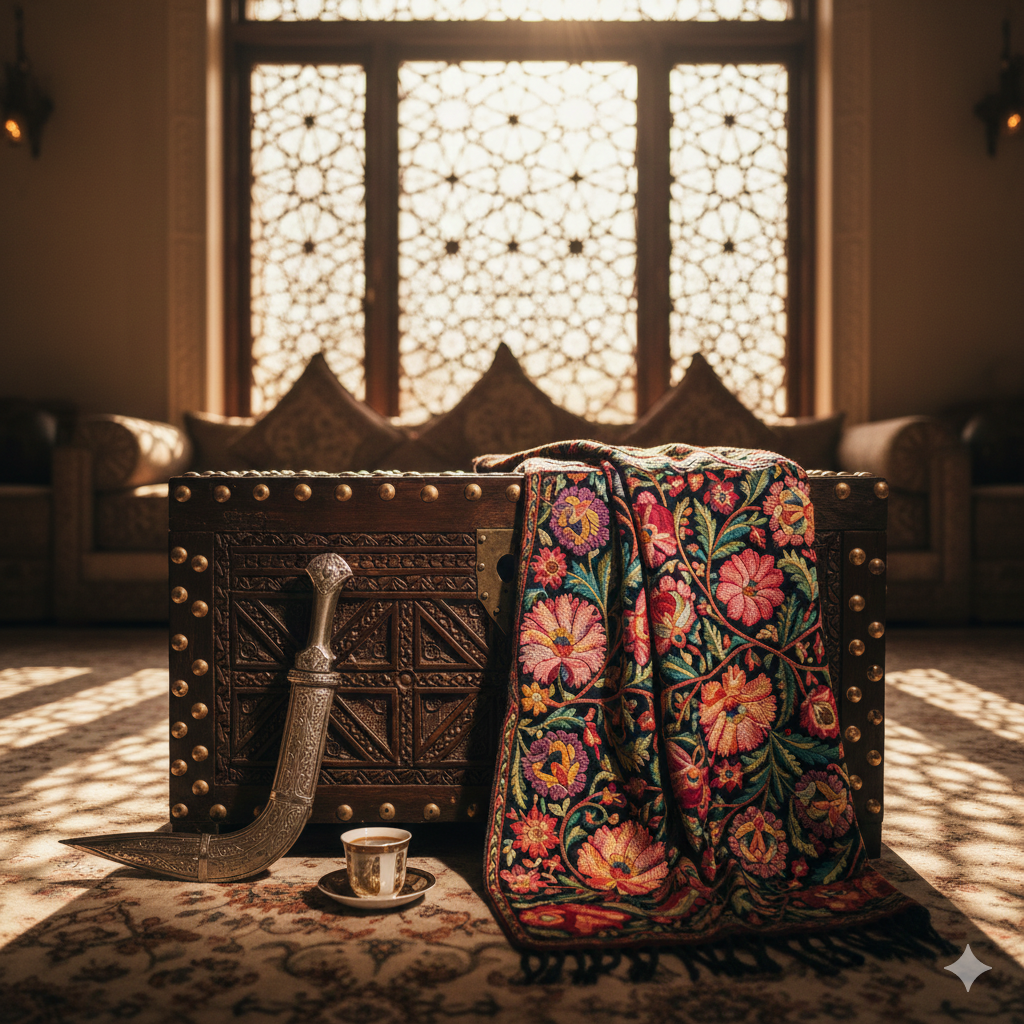
Beyond the dramatic mountain passes and the historic Silk Road, the exquisite arts of Kashmir have found a subtle yet significant home in an unexpected landscape: the Sultanate of Oman. The connection is not one of mass import but of shared sensibilities—a mutual appreciation for quiet luxury, intricate detail, and the profound dignity of handmade objects.
This is the story of how Kashmiri craftsmanship speaks to the Omani soul, not through grand bazaars, but through selective patronage, cultural parallel, and a growing vision of curated, meaningful luxury.
A Convergence of Aesthetics: Desert Minimalism Meets Mountain Ornament
At first glance, the stark beauty of the Omani desert and the lush valleys of Kashmir seem worlds apart. Yet, their artistic hearts beat in a similar rhythm of patience and precision.
- The Omani Appreciation for Detail: From the carved geometric patterns on Khanjar (dagger) hilts and mosque doors to the delicate silver embroidery on women’s ceremonial masar hats, Omani craft is defined by meticulous, meaningful ornamentation. This creates a natural affinity for the micro-embroidery of Sozni and the complex weave of Kani, where the value lies in the unseen hours of labor.
- A Shared Language of Luxury: Traditional Omani culture values understated, high-quality materials—fine cotton, pure silver, frankincense. The ethos of Pashmina, a luxury defined by feel and heritage rather than loud branding, resonates deeply. It aligns with the Omani principle of “Al-Ihsan”—doing things with excellence and beauty.
The Modern Gateway: Curated Boutiques & Bespoke Commissions
Today, the presence of Kashmiri craft in Oman is less about tourist souvenirs and more about curated integration into a discerning lifestyle.
- High-End Boutiques & Designer Stores: In upscale shopping districts of Muscat like Shatti Al Qurum or Azaiba, one finds select stores that carry authentic, high-grade Kashmiri shawls and scarves. These are marketed not as generic winter wear, but as investment pieces—luxury accessories for the cooler winter months (Al Sharqi season) and air-conditioned interiors, prized for their artistry.
- The Bespoke Interior Design Element: Oman’s thriving luxury interior design scene has become a key channel. Designers and private clients commission Kashmiri carpets with custom palettes that complement Omani architecture, or Papier-mâché boxes and decor items to add a layer of detailed, artisanal warmth to minimalist modern homes and five-star hotel lobbies.
- The Gift of Heirlooms: A finely embroidered Pashmina shawl remains a prized gift for weddings, Eid, and other major celebrations—a symbol of respect, generosity, and timeless taste. It is seen as an heirloom to be passed down.
Beyond the Shawl: Unexplored Parallels & Potential
The dialogue between these two craft cultures has only just begun. The potential for deeper connection is vast:
- Material Fusion: Imagine Omani frankincense resin used in the lacquer of Kashmiri Papier-mâché, or traditional Omani silver wire threads incorporated into contemporary Sozni work on ceremonial Kummas (men’s caps).
- Motif Dialogue: The geometric Khanjar motif or the graceful patterns of Omani henna could be reinterpreted by Kani weavers, creating a stunning fusion collection that tells a new cultural story.
- Craft Diplomacy & Workshops: Initiatives bringing Kashmiri master weavers to Oman’s National Museum or Bait Al Zubair for demonstration workshops could foster incredible cross-cultural learning and inspire a new generation in both regions.
Challenges & The Path Forward: Building Authentic Bridges
For this relationship to grow beyond a niche market, key steps are needed:
- Combating Imitation: The market in Oman, like globally, is flooded with cheap “Kashmiri-style” machine prints. Educating consumers on the signs of authenticity—the feel of real Pashm, the imperfection of hand-embroidery—is crucial.
- Direct Artisan Links: Building supply chains that connect Omani retailers directly to artisan cooperatives in Kashmir can ensure authenticity, fair pricing, and powerful storytelling.
- Positioning as “Art”: The most successful future lies in positioning these items not merely as crafts, but as portable art pieces. This elevates their status in the Omani market, which deeply values art and culture.
Conclusion: A Quiet Tapestry of Respect
The story of Kashmir’s arts in Oman is not written in broad strokes on busy streets. It is a quiet tapestry woven in private majlis gatherings, displayed in elegant homes, and gifted with deep intention. It reflects Oman’s selective, quality-driven approach to global culture.
In the Omani appreciation for Kashmir’s crafts, we see a powerful truth: great artistic traditions speak a universal language. They find their audience not by shouting, but by whispering of patience, beauty, and the human hand’s irreplaceable touch. As Oman continues to carve its unique path on the world stage, its curated embrace of Kashmir’s heritage serves as a model for how cultures can connect through the dignified, sustainable language of craft.
Have you seen Kashmiri crafts in Oman or the wider Gulf? What fusion between Omani and Kashmiri design would you like to see? Share your thoughts below.
This post is part of our series exploring the global journeys of Kashmiri craft. Read about its future on the world stage here, and the deep heritage of Sozni embroidery here.
