
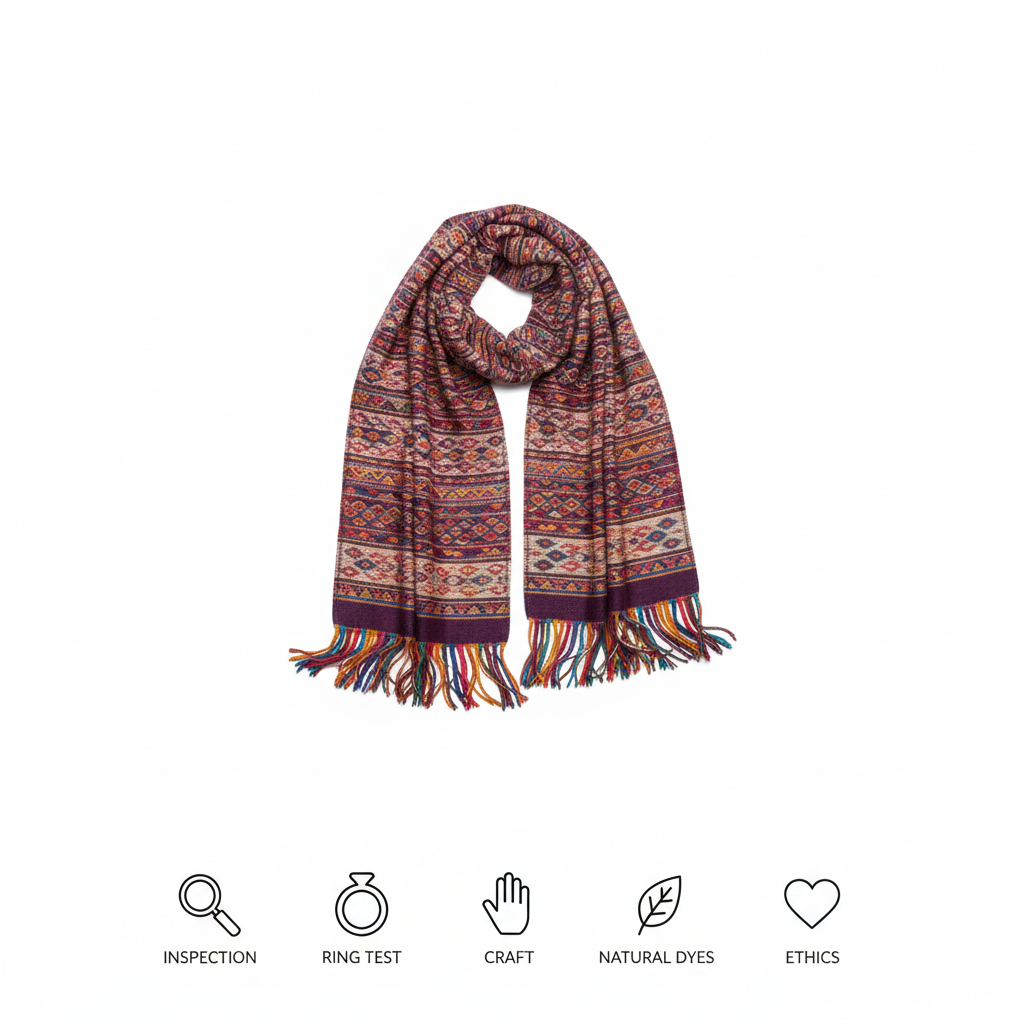
Introduction: Navigating the World of Pashmina
The allure of a genuine Kashmiri Pashmina is undeniable. Yet, the market is saturated with look-alikes made from wool, cashmere blends, or synthetics. Investing in the real thing means investing in centuries of artisanal heritage. This guide will arm you with the knowledge to make a confident, conscious choice. As custodians of this craft, Sonzal The Rainbow is here to demystify the five non-negotiable checks for authenticity.
1. The Fiber Check: Understanding the Source
This is the most critical factor. True Pashmina comes exclusively from the undercoat of the Changthangi goat. Imitations often use cheaper sheep wool, generic cashmere, or acrylic.
- The Ring Test: A classic, simple test due to the fiber’s fineness (12-16 microns). Try pulling a few strands through the hole of a finger ring. Genuine Pashmina will glide through effortlessly, while thicker, coarser fibers will catch.
- The Feel: It should feel impossibly soft and light, not heavy or scratchy. It creates a unique sensation of warmth without weight.

2. The Weave Check: The Mark of the Handloom
Authentic Pashmina is handwoven on traditional wooden looms. This is what gives it its soul and superior quality.
- Look for Imperfection: Examine the fabric closely. You may see slight, beautiful variations in the weave density. These are not flaws, but the “signature” of the human hand. Machine-made fabric will be uniformly perfect and often stiffer.
- The Drape Test: Hold it up. A handwoven Pashmina will have a fluid, graceful drape. It falls smoothly and holds beautiful folds.
3. The Embroidery Check: Hand-Wrought Poetry
Kashmir’s embroidery is world-renowned, and the technique reveals authenticity.
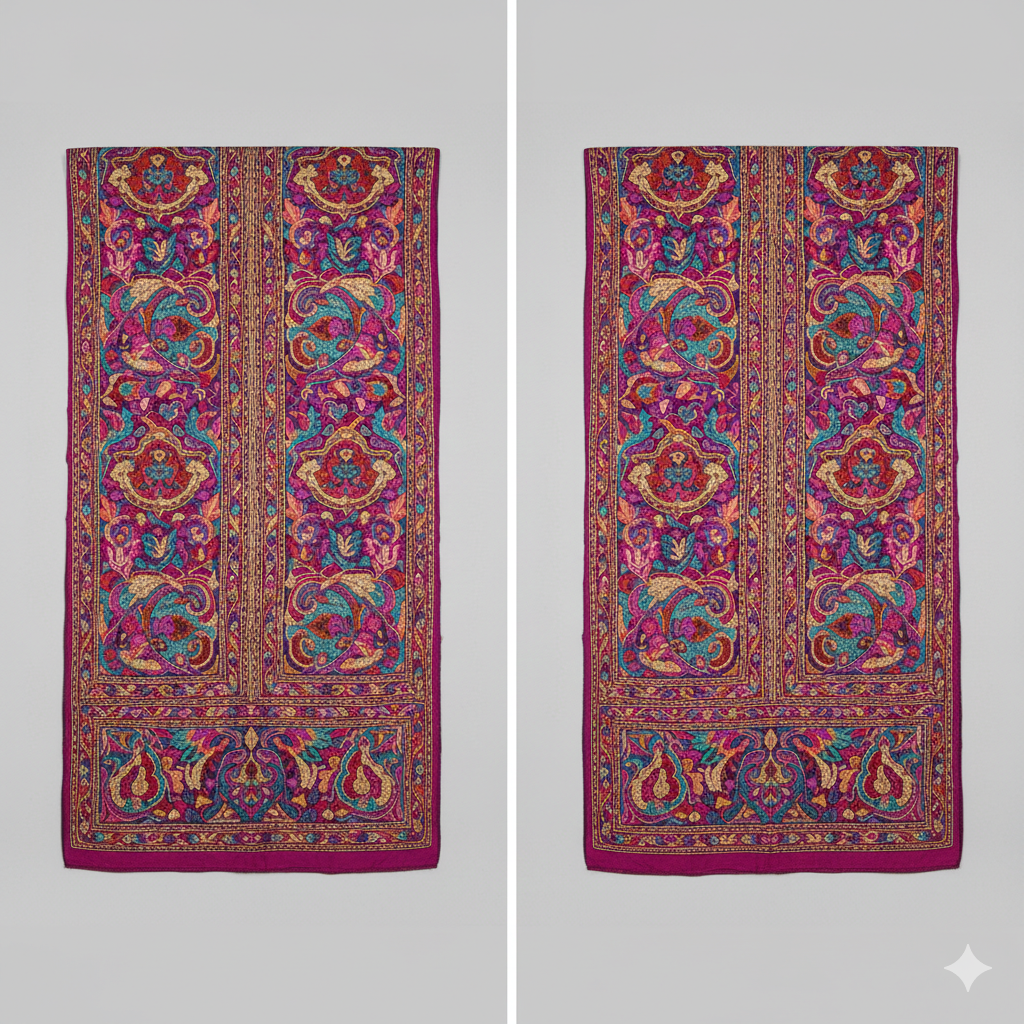
- The Reversibility Test: Gently turn over a piece with embroidery (like Sozni). The back should show a clean, nearly identical version of the front motif. This is because skilled artisans bury their thread with each stitch. Machine embroidery will have a messy back with loose threads or a visible backing material.
- Feel the Texture: Hand embroidery has a slight, tactile raised texture. It is part of the fabric. Machine embroidery can feel flat, plasticky, or glued on.
4. The Color Check: The Depth of Nature
True luxury uses colors worthy of the fabric. Many mass-market pieces use cheap, chemical dyes.
- Ask About Dyes: A brand committed to craft will often use natural dyes. These colors have a complex, organic vibrancy—think of the deep gold of saffron or the muted crimson of madder root. They age gracefully, becoming part of the piece’s story.
- Visual Depth: Natural dyes often have a subtle, non-uniform depth that gives the color life, unlike the flat, harsh tone of some synthetics.
5. The Ethos Check: Who Made Your Shawl?
Finally, consider the brand’s transparency and ethics. Who are they? What is their connection to the craft?
- Provenance: Do they speak about their artisans, regions, or processes? At Sonzal, we are a bridge between the artisan and you. We honor the name “Rainbow” by ensuring every hue of our process—from herder to weaver to you—is treated with respect.
- Value, Not Just Price: An authentic Pashmina is an investment because it represents months of skilled labor and rare materials. If a price seems too good to be true, it almost certainly is.
Conclusion: Your Informed Choice
Armed with this knowledge, you are no longer just a shopper—you are a discriminating patron of the arts. Your choice supports a living heritage and rewards generations of skill.
At Sonzal The Rainbow, these five principles are our foundation. We invite you to apply this checklist to our collection with confidence. Feel the difference, see the craftsmanship, and own a piece where every detail honors its origin.
Call-to-Action:
Ready to invest in authenticity? Explore our collection, where every piece passes the ultimate test: the test of heritage and heart.
P.S. Have questions about a specific piece? Our craft concierge is here to help. Contact Us
